How the Vagus Nerve Helps Regulate Anxiety in Adults Healing from Childhood Trauma
The vagus nerve is a cranial nerve that begins in your brainstem and travels down through your neck and chest into your abdomen, connecting with many major organs along the way. The vagus nerve is the longest cranial nerve in your body and it connects to every major organ and body system. It connects the heart, the lungs, the ears, the throat, the stomach, and the intestines to name a few. Its job is to carry messages between your brain and the parts of your body that control automatic body functions like heart rate, digestion, blood pressure, immune response, and breathing.
Your body's organs can communicate sensory information back to your brain via the vagus nerve. If you’ve ever heard of the gut-brain axis, it’s the communication that occurs between the brain and the gut, and the vagus nerve plays a role.
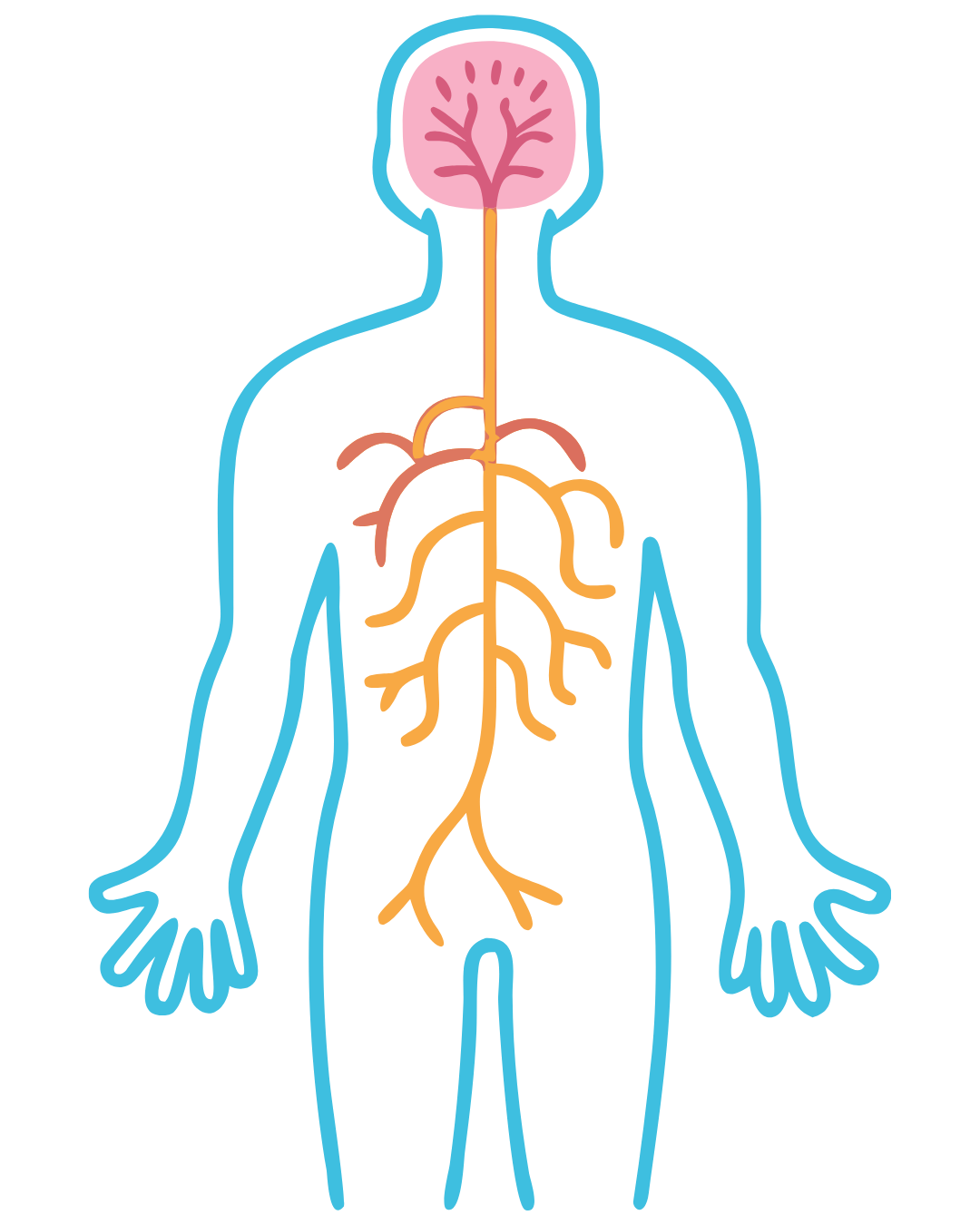
The general path of the vagus nerve
The vagus nerve is essentially responsible for communication between your brain and the parts of your body that make up the parasympathetic nervous system, otherwise known as the ‘rest and digest’ response. The rest and digest response is when your body goes out of fight or flight mode and into a calmer state where you can literally rest and digest your food.
Have you ever felt so worried about something that your stomach started to hurt or you lost your appetite and then once the stress finally passed you could eat again? This was initially your fight or flight response activating and your rest and digest response reacting to soothe when the stress passed.
As a trauma therapist who works with adults healing from childhood trauma and emotional neglect, I often see how chronic stress becomes wired into the nervous system. Many cycle breakers and adult children of emotionally immature parents struggle with anxiety that feels constant and hard to turn off. Understanding the vagus nerve can be an empowering step in supporting your health and growth.
How Chronic Stress and Childhood Trauma Impact the Nervous System
For those who experience prolonged stress, anxiety, or trauma, they may even develop gastrointestinal issues like IBS related to being in the fight or flight response too often. Prolonged stress can also impact the strength of your immune system and raise your blood pressure.
We live in an incredibly stressful world. Even without a history of childhood trauma or anxiety, many people are experiencing prolonged anxiety due to the state of the world and bearing witness to or being directly impacted by multiple atrocities in our society and culture.
Many people right now are not only scared about the current state of the US and the world, but also of the future. Having anxiety and experiencing stress from this is a normal and expected response. However, staying in a state of constant stress will burn out your nervous system and make you less resilient in handling big stressors and small stressors alike.
For adults who grew up in environments of emotional neglect, unpredictability, or abuse, this chronic stress response often began in childhood. When you had to stay hyper-aware, overly responsible, or emotionally shut down to survive, your nervous system adapted. Over time, that can look like persistent anxiety, tension, exhaustion, or difficulty feeling safe in your own body.
When your nervous system is amped up consistently and you can’t escape the stress, it’s helpful to counter the stress by intentionally practicing exercises that trigger your parasympathetic rest and digest response to give your body some calming help. This isn’t about avoiding or ignoring, it’s about supporting your body to balance out the stress more.
What Is Vagal Tone?
Enter the vagus nerve and how it can help you.
When you’ve been enduring chronic stress, your vagus nerve is impacted. The signals and messages between the brain to the rest of your body slow down. If the vagus nerve is an information superhighway between your brain and body, a weakened vagus nerve has some traffic jams and uneven flow of communication. This is called having a low vagal tone.
Low vagal tone is associated with reduced resiliency to stress and chronic health issues including depression. Having a high vagal tone is associated with increased resilience, better health, and increased sense of well-being — despite having to continue living in stressful situations.
This piece is important. There are certain kinds of stress and even trauma that we can’t escape or avoid. There are many circumstances where it’s not necessarily helpful to avoid because it’s simply unrealistic to or because avoiding constantly drains you and creates a feeling of being powerless.
So how do you support yourself to cope better with enduring stress and trauma?
You can strengthen your vagal tone and build stronger resiliency to stress by practicing vagal toning exercises. This is also called stimulating the vagus nerve. The cool thing is, there’s likely everyday things you are already doing that support a healthy vagal tone.
Everyday Ways to Stimulate the Vagus Nerve
Singing
Humming
Gargling (yes, like when you use mouthwash)
Massaging your lower jaw
Bursts of hearty laughter
Dancing
Playing wind instruments
Yoga
Tai Chi
Running and other forms of endurance cardio
Sudden cold water on your face and neck
Breathing exercises

Give yourself permission to do the activities that will positively impact your mental and physical health. The more fun and joyful they are for you, the better. The activities above can be done in groups or by yourself. If you do it with a group, singing in a choir for example or going to a yoga class, you also get the benefit of group co-regulation and positive (hopefully) social experiences.
Three Vagus Nerve Exercises for Anxiety and Trauma
Below are three quick exercises to directly stimulate the vagus nerve. Incorporating a mix of these into your daily routine or as a response when you get overwhelmed and stressed can help to support your wellbeing and keep you more balanced.
Each one takes just a few minutes and can be adapted to fit your comfort level. Try to pay attention to how you feel before and after. Do you feel lighter? Less tense? Can you take deeper breaths? Do you feel sleepy? These are all good signs that your body has responded and activated your parasympathetic nervous system.
Depending on the level of activation of your stress response, you may need to do these exercises for an extended period (5 minutes or more) to feel the impact. Practicing regularly will increase your vagal tone over time positively impacting your overall health.
1. Voo Breathing
Humming, singing, chanting, and creating vibration in your throat are all ways to stimulate the vagus nerve—and Voo breathing is especially helpful because it produces a deep, resonant vibration through the body.
To try it:
Find a place where you feel comfortable making some noise. You can sit or stand, close your eyes or keep them open—whatever feels better.
Start by noticing your natural breathing.
Take a deep breath in, filling your belly.
On the out-breath, slowly make the sound “VOO,” allowing the sound and vibration to continue for as long as your exhale lasts.
Let your vocal cords vibrate as deeply as possible, and notice how that vibration feels in your body.
Play around and see how low in your sternum and belly you can get the vibration
Repeat several times, or for 3–5 minutes.
You may feel silly at first, and that’s okay—if you want to laugh, go ahead! Laughter is another way your body activates the parasympathetic nervous system.
Tip: Set a timer and repeat VOO breaths for 3–5 minutes, checking in with your body between rounds to notice shifts like deepening breath, softening muscles, or a sense of ease.
This technique was developed by Peter Levine, Ph.D., founder of Somatic Experiencing. See a video demonstration.
2. Vagus Nerve Ear Massage
The ears contain pressure points that connect to the vagus nerve, and gentle stimulation in these areas can help activate your parasympathetic response.
To try it:
Locate the mid-upper spot of your ear just below the rook—the area above the ridge and just above the opening of your ear canal.
Using your finger or a Q-tip, gently massage this spot in tiny circular motions.
Repeat on both ears, massaging for about 30 seconds on each side.
As you do this, notice any changes in your body—yawning, sighing, sleepiness, and deeper breathing are all signs your nervous system is beginning to relax.
Tip: Try pairing this with VOO breathing for a more soothing, layered effect.
I learned this technique, the “Hollows Vagus Nerve Ear Massage,” from Becca Odom Wellness. Watch her demonstrate here.
3. The Basic Exercise by Stanley Rosenberg
This is a gentle and effective technique for stimulating the vagus nerve. It’s one I often recommend to clients in therapy.
To try it:
Step 1: Do a Neck Mobility Pre-Test
While sitting, gently turn your head to the right as far as is comfortable. Then turn to the left. Notice any tension or pain, but don’t push past it.
Step 2: Try the Exercise
Lie on your back on the floor.
Interlace your fingers and place them behind your head, letting your head rest fully in your hands so there’s a little pressure on the back of your head.
Without moving your head, shift only your eyes to look all the way to the right. Hold this for about 60 seconds or until you sigh, yawn, or swallow—these are signs that your autonomic nervous system is relaxing.
Now do the same on the left side.
When finished, let your arms relax and take a few deep breaths.
Step 3: Re-Test Your Neck Mobility
Turn your head left and right again. Many people notice increased range of motion or a decrease in neck tension. This is a sign your vagus nerve is responding, and your nervous system is starting to shift.
Tip: You can also do this exercise while seated—just make sure your head is pressing gently into your hands to create some resistance. The pressure is part of what makes it work.
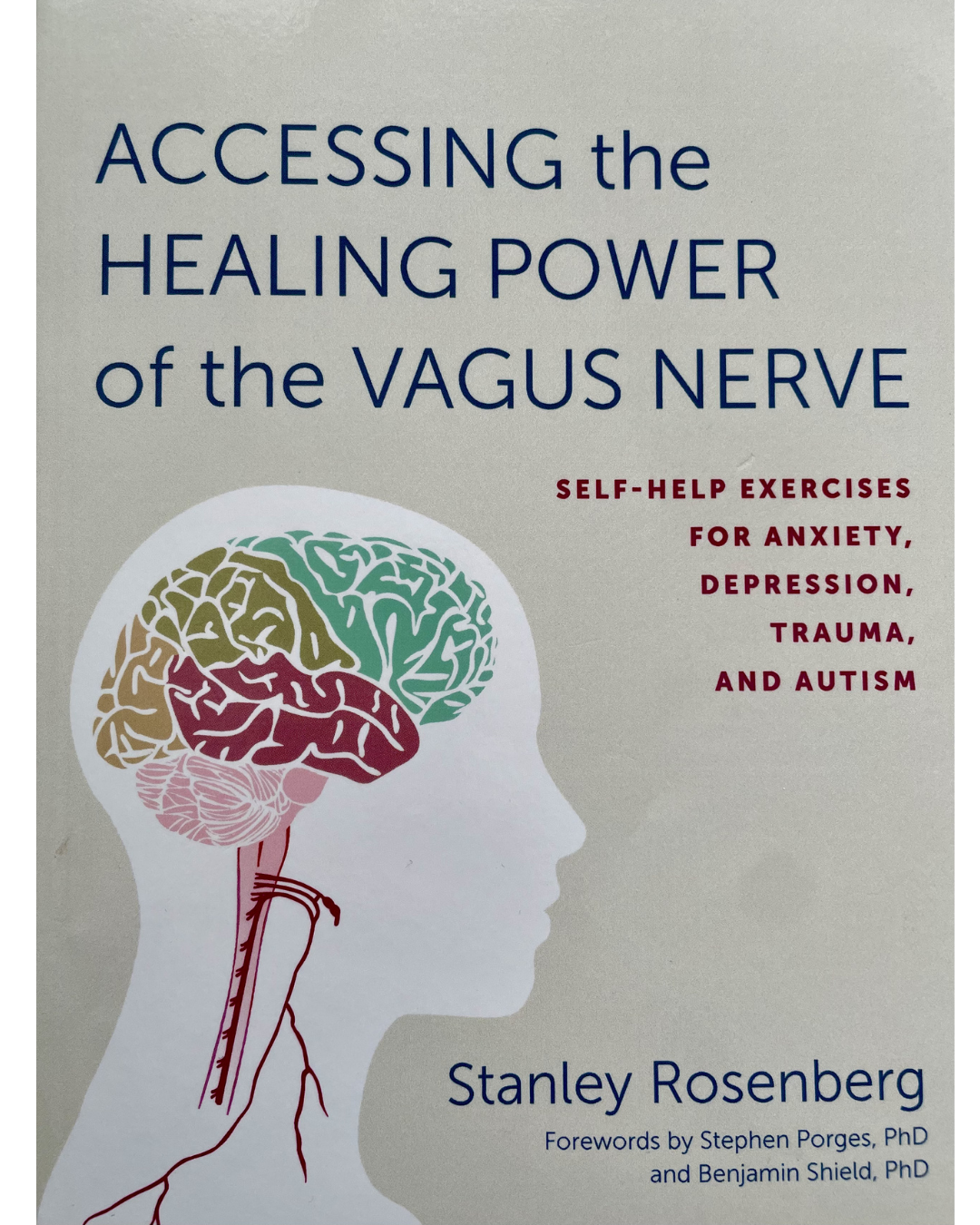
This exercise and more can be found in Accessing the Healing Power of the Vagus Nerve by Stanley Rosenberg. Watch a video demonstration here.
Why Nervous System Regulation Matters in Trauma Therapy
In trauma therapy, especially when working with childhood emotional neglect or relational trauma, we aren’t just talking about memories — we’re working with the memories of the nervous system.
As a childhood trauma therapist, I frequently teach these techniques and others to help my clients increase their resilience and capacity to cope. I do a lot of work around breaking cycles of abuse, and I’ve found that learning how to support your body is an essential part of healing and growing.
For cycle breakers and adult children of emotionally immature parents, learning nervous system regulation is often what enables you to do what is needed to prioritize your own needs and get yourself to a healthier, more empowered place.
Trauma Therapy for Adults in North Carolina
In my Asheville-based therapy practice, I specialize in working with adults healing from childhood trauma, emotional neglect, and anxiety. I work with many clients who identify as cycle breakers — those committed to ending patterns of abuse, emotional immaturity, and generational trauma.
I offer online therapy throughout North Carolina, supporting adults who are looking for a trauma therapist, a therapist for childhood emotional neglect, or a therapist who understands the unique experience of adult children of emotionally immature parents.
If you’re feeling stuck in chronic stress or anxiety, you don’t have to navigate it by yourself. Therapy can help you build resilience at the nervous system level so that you’re not just coping — you’re healing and growing into a healthier version of yourself.
You can learn more about working with me or schedule a consultation here.
If you’d like to explore more body-based tools, you can read about 3 EMDR stabilization techniques to help you ground and calm when overwhelmed, which I often use in trauma therapy with adults healing from childhood emotional neglect and anxiety. There are also some great breathing exercises that help calm anxiety and stimulate the vagus nerve, which are some of my favorites because you can do them in any setting and they are much more discreet.